Guide
Best Vehicles for Family Holidays Around WA
· 8 min read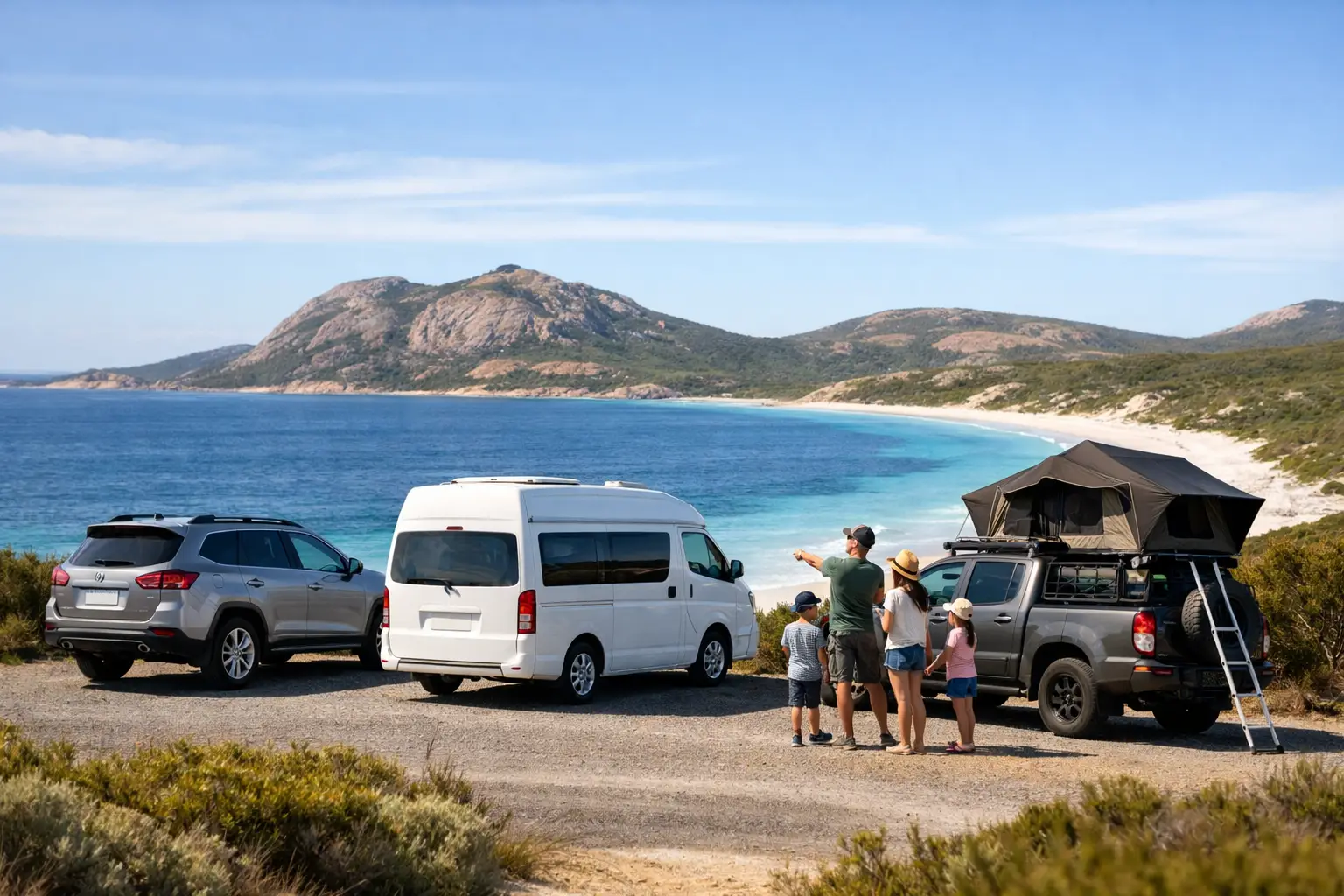
A family holiday can start brilliantly, then unravel before you reach the outskirts of Perth. Bags are wedged around feet, the pram will not fit, someone is too warm in the back seat, and the fuel gauge seems to drop faster than expected. Choosing one of the best vehicles for family holidays means planning for the real trip, not just the drive to the shops.
The right vehicle gives everyone room to travel comfortably, carries the gear you will actually use and suits the roads on your itinerary. For a weekend in Margaret River, a school holiday run to Busselton or a longer trip north, the best choice depends on the number of passengers, luggage, travel distance and where you intend to go.
Start with your family’s non-negotiables
Before comparing vehicle types, work out what must fit. Count every passenger, including teenagers who need proper legroom and children who need car seats or boosters. Then consider the practical items: suitcases, a pram, beach gear, a portable cot, groceries, snacks, chargers and, for many WA trips, an esky.
A five-seat vehicle may technically carry five people, but that does not mean it will be comfortable for five people and a week’s worth of luggage. If the middle rear seat is needed for a child seat, access can also become awkward. For families with three children, or anyone travelling with grandparents, seven seats can be the difference between a relaxed drive and a cramped one.
Think about the route as well. Most family holidays are well served by a conventional passenger vehicle or SUV. If you are sticking to sealed roads, do not pay for off-road capability you will not use. If your plans include unsealed access roads, long regional stretches or a holiday home with a steep driveway, higher clearance and a more capable vehicle may be worthwhile.
The best vehicles for family holidays by trip type
There is no single best car for every family. A compact SUV can be ideal for two adults and one child on a three-night getaway, while a larger group heading down south for a week will value passenger space above almost everything else.
Compact SUV for a couple with one or two children
A compact SUV is a sensible option for smaller families packing light. It usually offers a higher seating position than a hatchback, useful boot space and good fuel economy for city driving and regional highways. It is also easier to park at crowded beaches, holiday towns and accommodation with limited bays.
The trade-off is luggage capacity. A compact SUV can feel full quickly once you add a large pram, travel cot or several hard-shell cases. Check the boot shape as well as its quoted size. A square, usable boot often matters more than a number on a spec sheet.
Mid-size SUV for longer road trips
For many families, a mid-size SUV is the practical sweet spot. It provides more rear-seat comfort, a deeper boot and enough power to handle longer distances without feeling strained when fully loaded. It suits a week away, regular stops for supplies and the usual pile of holiday gear.
Look for rear air vents, multiple charging points and cup holders that are actually usable. These small details make a noticeable difference on a four-hour drive. Split-fold rear seats are helpful too, but remember that folding seats reduces passenger capacity, so it is not a solution if every seat is occupied.
Seven-seat SUV for larger families and extra gear
A seven-seat SUV is often the best answer for a family of five or more, or for groups travelling together. The extra row gives you flexibility for children, grandparents or friends, and makes airport pick-ups and day trips much simpler.
There is one important catch: when all seven seats are in use, the boot can be limited. For a fully occupied vehicle, soft bags are easier to pack than bulky suitcases. If everyone needs to bring plenty of luggage, consider whether a larger people mover may better suit the trip.
People mover for maximum passenger comfort
People movers are designed around people, which is exactly their advantage on a family holiday. They generally provide easier access to the rear rows, more flexible seating and better room for multiple child seats. Sliding doors are especially useful in tight car parks when children are getting in and out.
They may not feel as sporty as an SUV, but that is rarely the point. For a multi-generational trip, a group with several young children or a longer journey where everyone needs personal space, a people mover can be the most comfortable choice on the road.
Ute or van for gear-heavy holidays
A ute or van can make sense when the trip involves bulky equipment, such as camping supplies, bikes, fishing gear or a large amount of sporting equipment. However, passenger comfort and secure storage need careful thought. Gear carried in a ute tray must be properly protected and secured from weather and theft.
For most standard family getaways, a passenger vehicle with a generous enclosed boot is simpler. Choose a ute or van because the gear genuinely requires it, not just because it appears larger.
Check comfort where it counts
The best holiday vehicle is not simply the biggest one available. It is the one that makes the full journey easier. Rear-seat legroom matters on long runs to Albany, Kalbarri or Esperance. So does air conditioning that reaches every row, especially during a WA summer.
If children are travelling, check the placement of ISOFIX points and top-tether anchors before you leave. Fit car seats properly and confirm that the front seats can still move back enough for adult comfort. Never assume three child seats will fit across a rear bench just because a vehicle has three seatbelts.
Consider visibility, too. A vehicle that is easy to manoeuvre reduces stress at service stations, busy car parks and unfamiliar accommodation. Reversing cameras and parking sensors are not luxuries when you are managing tired passengers, luggage and tight spaces.
Budget beyond the booking price
A cheaper vehicle can cost more overall if it is too small and forces you to take extra gear, book another car or make compromises that affect the trip. On the other hand, booking the largest option by default can mean higher fuel use and less convenient parking.
Choose a vehicle size that matches your passenger and luggage needs, then compare the full cost clearly. Look for transparent pricing, understand what is included and allow for fuel, tolls where relevant, insurance options and any child-seat requirements. A clear rental arrangement gives you more control over the holiday budget before you leave Perth.
Fuel economy matters most on longer drives. For short breaks within a few hours of Perth, comfort and boot space may be more valuable than small differences in fuel consumption. For a regional road trip covering hundreds or thousands of kilometres, an efficient vehicle can make a meaningful difference.
Plan for the road, not just the destination
Pack the vehicle the night before where possible. Put items needed during the drive within reach, such as water, snacks, hats, wipes and charging cables. Keep heavy luggage low and secure in the boot, rather than loose in the cabin.
Build in breaks before anyone gets restless. On longer routes, stopping every couple of hours is sensible for drivers and passengers alike. Check fuel availability if you are travelling through regional areas, particularly outside larger towns, and do not rely on mobile coverage everywhere.
It also helps to choose accommodation with parking that suits the vehicle. A seven-seat SUV or people mover is practical on the open road, but may be less convenient in a narrow inner-city bay. This is not a reason to avoid the right-sized vehicle - just one more detail worth checking early.
Make the booking fit the holiday
Family plans can change quickly. A school event runs late, a flight time shifts or you decide to extend the trip by a day. Flexible vehicle access is useful when your transport needs do not fit neatly into a standard schedule.
TAK8 offers a straightforward way to choose a vehicle that suits the trip, with clear pricing and no hidden fees. The focus should be simple: select enough room for your passengers and luggage, confirm the practical features you need, and book for the time you actually require.
The best family holiday vehicle is the one you stop thinking about once the bags are packed. When everyone has space, the gear fits and the drive feels manageable, you can spend less energy solving transport problems and more time deciding where to stop for the first swim.